
Category Archives: What is it?

What is Agriculture? The Future of Agriculture Is More Controlled

Agriculture is the cultivation of biological systems for uses that sustain and enhance human life.

Before humans discovered agriculture, we were hunters and gatherers. We did not regularly plant crops to produce food. Instead, we collected wild plants, hunted animals, and moved to wherever food was available.

Agriculture changed this relationship.

Instead of finding food in nature, humans began controlling where food grew. We selected plants with useful traits, planted seeds near settlements, removed competing plants, and protected crops from animals.

Agriculture was one of the first large attempts by humans to control a biological system.

Controlling the Environment

A farmer cannot completely control a field.

The farmer does not control when it rains, how hot the summer becomes, which insects arrive, or whether a disease appears. The farmer works inside a biological system that is influenced by weather, soil, animals, microorganisms, and chance.

Most improvements in agriculture have increased the amount of control farmers have over this system.

Irrigation gives crops water when rainfall is not enough.

Synthetic fertilizers provide nutrients when the soil cannot provide enough.

Herbicides reduce competition from unwanted plants.

Pesticides protect crops from insects and other organisms.

Greenhouses protect plants from cold weather and allow farmers to control temperature, humidity, and water.

Each of these technologies removes part of the uncertainty from agriculture.

A crop that once depended entirely on rain can now receive water through irrigation. A plant that could only grow during one season can be grown inside a greenhouse. A field that might lose much of its harvest to insects can be protected.

Modern agriculture is not simply producing more food. It is producing more control over the biological system that creates the food.

A Field Is an Uncontrolled Environment

A field may appear organized. The crops are planted in rows. The plants are the same species and often the same variety. Machines move through the field in predictable patterns.

But the environment is still difficult to control.

Rain may come at the wrong time.

The soil may contain too little nitrogen.

An insect population may increase.

A fungus may spread between plants.

A late frost may damage flowers before fruit develops.

A heat wave may prevent seeds from forming.

Farmers use technology to reduce these risks, but the field remains exposed to the larger environment.

This creates a possible direction for the future of agriculture: move the biological system into a more controlled environment.

We have already started this trend.

From Fields to Greenhouses

A greenhouse separates plants from part of the outside environment.

The temperature can be controlled. Water can be delivered directly to the roots. Insects can be kept outside. Light can sometimes be added when sunlight is limited.

Hydroponic systems take this idea further.

Instead of growing plants in soil, the plants receive water containing carefully measured nutrients. The grower can control how much water, nitrogen, phosphorus, potassium, and other nutrients the plant receives.

Indoor farms move the system even further from the field.

Plants can be grown under artificial lights inside buildings. Temperature, humidity, airflow, water, nutrients, and light can all be adjusted.

This requires more technology and energy, but it also creates more control.

A drought outside does not have to cause a drought inside.

Winter does not have to stop production.

The crop does not have to be grown near the people who will eat it.

The farm becomes less like an open field and more like a biological factory.

The Limits of Crop Yield

There is a limit to how much food a plant can produce.

A plant receives energy from light. It uses that energy to grow roots, stems, leaves, flowers, fruit, and seeds. It also uses energy to protect itself from insects, diseases, heat, cold, and competition.

Humans have spent thousands of years selecting plants that put more of their energy into the parts we want.

Wild plants may produce small seeds that easily fall to the ground. Agricultural plants may produce larger seeds that remain on the plant until harvest.

Wild fruit may be small, bitter, or filled with seeds. Cultivated fruit may be larger, sweeter, and easier to eat.

But breeding cannot increase yields forever.

Eventually, a crop approaches its biological limits. There is only so much sunlight available. There is only so much carbon dioxide a plant can absorb. There is only so efficiently the plant can convert those resources into food.

When the theoretical limit of crop yield is reached, we will need to find new and more efficient ways to fulfill our needs.

One possibility is to improve the environment around the organism.

Another possibility is to change the organism.

A third possibility is to stop growing the entire organism when we only need one part of it.

Growing Meat Without the Animal

An example of this trend is Memphis Meats, a startup created to grow meat from cultured animal cells instead of raising and slaughtering entire animals.

Normally, producing meat requires growing an animal.

The animal needs food, water, land, shelter, and medical care. Much of the energy consumed by the animal does not become meat. The animal uses energy to grow bones, organs, skin, hair, and other tissues. It uses energy to walk, breathe, maintain its body temperature, and remain alive.

But consumers are normally interested in only part of the animal.

They want the muscle and fat that become meat.

Cultivated meat asks a simple question:

Why grow the entire animal when we only want some of its cells?

Cells can be collected from an animal and placed in an environment containing the nutrients they need. The cells reproduce and form tissue. Instead of controlling a field or a barn, producers control the conditions surrounding the cells.

This is agriculture moved into a much more controlled environment.

Is Cultivated Meat Still Agriculture?

Agriculture normally makes us think of fields, tractors, barns, and animals.

Cultivated meat may happen inside a building filled with stainless-steel equipment. Workers may look more like laboratory technicians than farmers.

But it is still the cultivation of a biological system for human use.

The biological system has simply changed scale.

Instead of raising an entire cow, the producer cultivates cow cells.

Instead of controlling acres of land, the producer controls the temperature, nutrients, oxygen, and cleanliness inside a container.

This may not look like traditional agriculture, but it follows the same basic idea.

Humans are creating an environment in which a useful biological system can grow.

Possible Benefits

A more controlled system may reduce some of the risks associated with traditional meat production.

Animals raised close together can spread diseases. Animal waste can enter water systems. Raising livestock requires land to grow feed and space for the animals. Slaughter creates ethical concerns for people who object to killing animals.

Cultivated meat might reduce some of these concerns.

The cells can be grown in a controlled environment.

The production system may require less land than raising animals.

Fewer animals may need to be raised and slaughtered.

The conditions can be monitored for contamination.

The system might also allow producers to control the amount and type of fat in the final product.

This does not mean that cultivated meat has no environmental or health effects. It means that some parts of the system may become easier to control.

New Control Creates New Dependencies

More control normally requires more technology.

A cow can survive for some time if a machine breaks. Cells growing inside a controlled container may not.

The system may depend on electricity, temperature control, sterile equipment, nutrient mixtures, sensors, pumps, and trained workers.

A field receives light from the sun. An indoor farm may depend on electric lights.

Rain can provide water to a crop. A hydroponic farm depends on pumps and water-treatment systems.

Grass can feed a cow. Cultivated cells may need nutrients that have been carefully produced and purified.

The controlled environment removes some risks while creating new ones.

A drought may no longer destroy the crop, but a power outage might.

An insect may no longer eat the plant, but a software failure might stop the irrigation system.

More control does not mean no risk. It changes the type of risk.

Is More Control Better for People?

Controlled agriculture may produce food more consistently.

Indoor farms can operate throughout the year. Cultivated meat might reduce exposure to some diseases associated with raising and processing animals. Controlled systems may allow producers to monitor the production environment more closely.

However, the technology may also make food production more expensive.

A field can be farmed with relatively simple tools. A cellular agriculture facility requires specialized equipment and knowledge.

If only a few companies can afford the equipment or own the necessary patents, food production could become concentrated among those companies.

A technology that produces safe food is good for people.

A technology that produces food no one can afford is less useful.

Is More Control Better for the Planet?

Traditional agriculture uses large amounts of land and water. It can reduce habitat, cause soil erosion, and allow fertilizers or pesticides to enter nearby ecosystems.

Controlled agriculture may use less land and apply water and nutrients more precisely.

But an indoor system may use more electricity. Equipment must be manufactured. Buildings must be heated, cooled, cleaned, and maintained.

The environmental benefit depends on the whole system.

An indoor farm powered by low-carbon electricity may have a different environmental effect than one powered by fossil fuels.

Cultivated meat that uses fewer resources than raising animals could reduce environmental pressure. If it requires very large amounts of energy and difficult-to-produce materials, the benefit may be smaller.

Moving agriculture indoors does not remove its environmental impact.

It moves and changes that impact.

Is More Control Better for Profit?

Controlled systems may allow producers to grow food closer to cities and throughout the year.

A company may be able to produce crops in places where outdoor farming is difficult. Food can be grown closer to consumers, possibly reducing transportation and spoilage.

However, the cost of equipment, electricity, buildings, and specialized workers may make some products too expensive.

The system must create more value than it costs to operate.

This may work first for products that are expensive, highly perishable, or difficult to transport. Leafy vegetables, herbs, specialized ingredients, and certain types of meat may make more sense than crops such as wheat or corn.

A controlled system may be biologically possible without being economically useful.

The Future Farm

The farm of the future may not be one thing.

Some food will continue to come from fields.

Some will come from greenhouses.

Some will come from indoor vertical farms.

Some ingredients may be produced by microorganisms inside fermentation tanks.

Some meat may come from animals, while some may be grown from cells.

The future of agriculture is not necessarily the end of farms. It is the expansion of agriculture into new types of controlled environments.

As humans gain more control over biological systems, the line between agriculture, manufacturing, and biotechnology will become less clear.

A field produces wheat.

A greenhouse produces tomatoes.

A fermentation tank produces a protein.

A container of animal cells produces meat.

All of these systems cultivate biology to sustain or enhance human life.

Closing Thoughts

Agriculture began when humans stopped depending entirely on the biological systems they found and started changing those systems to better meet their needs.

Modern agriculture continued this trend through irrigation, fertilizers, pesticides, machinery, breeding, and controlled environments.

The next step may be to control even more of the system.

Instead of changing the weather, we move the crop inside.

Instead of protecting an animal from disease, we grow only the cells we need.

Instead of accepting the limits of a field, we build a new environment around the organism.

This could reduce health risks, ethical concerns, and environmental impacts. It could also increase energy use, technological dependence, cost, and corporate control.

The important question is not whether controlled agriculture is natural or artificial.

The important questions are:

Is it good for people?

Is it good for the planet?

Does it create useful value?

And what new risks do we accept in exchange for greater control?

Did you learn something? Did we get something wrong? Leave a comment below.
Does “Natural” Mean Safe? Does “Artificial” Mean Dangerous?

People often use the word natural when they want to say that something is good.

Natural food. Natural medicine. Natural ingredients.

Artificial is often used to mean the opposite.

Artificial chemicals. Artificial flavors. Artificial organisms.

The assumption is simple:

Natural things are safe. Artificial things are dangerous.

But is this true?

Nature Is Trying to Kill You

That might sound dramatic, but nature produces many dangerous things.

Poison ivy is natural.

Venom from a rattlesnake is natural.

Deadly mushrooms are natural.

Bacteria that cause disease are natural.

A hurricane is natural.

Cancer is also natural. Cancer occurs when cells in an organism begin growing and dividing in ways that harm the organism. Nothing artificial has to be added for cancer to develop.

Natural selection does not make organisms safe for humans. It helps organisms survive and reproduce.

A poisonous plant might produce a toxin because the toxin prevents an animal from eating it. This is good for the plant. It is not good for the animal.

Nature is not good or evil. Nature is a system.

Artificial Things Can Also Be Dangerous

This does not mean that artificial things are automatically safe.

Humans can create dangerous chemicals, weapons, pollutants, and technologies.

An artificial compound might remain in the environment for a long time. A machine might injure someone. A new medicine might have side effects that were not discovered during testing.

Artificial things can create risks that would not have existed naturally.

The problem is not that artificial things are always dangerous. The problem is that humans can make mistakes.

Sometimes we do not understand the full effects of what we create. Sometimes a product solves one problem while creating another.

A pesticide might protect a crop but harm beneficial insects.

A medicine might cure a disease but produce serious side effects.

A plastic container might preserve food but create pollution after it is thrown away.

The technology might be good at doing its job while still causing problems somewhere else.

What Does Natural Mean?

The definition of natural can be confusing.

Humans are part of nature. Humans build things using materials found in nature. Does that make everything humans create natural?

A bird builds a nest.

A beaver builds a dam.

A human builds a house.

At what point does building become artificial?

Consider some questions:

Is a selectively bred dog natural?

Is corn that has been bred by humans for hundreds of years natural?

Is a plant produced through hybrid breeding natural?

Is a plant changed by exposing its seeds to radiation natural?

Is insulin produced by genetically modified bacteria natural?

Is a vitamin made in a factory different from the same vitamin found in an orange?

There is a gradient between natural and artificial. There is not always a clear line.

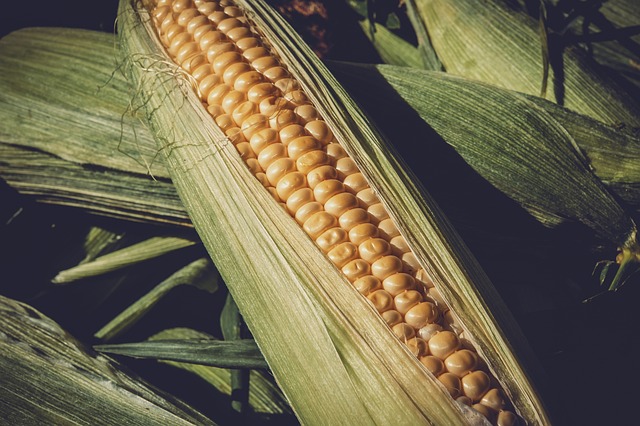
Corn is a good example. Humans have changed corn through generations of selection and breeding. Modern corn looks very different from its wild ancestors. The breeding process did not require modern genetic engineering, but the plant was still changed by people.

Calling the corn natural does not tell us how much humans changed it.

Chemicals Are Not Automatically Bad

The word chemical also scares people.

Everything is made of chemicals.

Water is a chemical.

Oxygen is a chemical.

Sugar is a chemical.

The toxins produced by plants are chemicals.

The compounds in medicine are chemicals.

A chemical is not safe or dangerous because it has a complicated name. Its effects depend on the compound, the amount, how someone is exposed to it, and how long the exposure lasts.

Water is necessary for life, but too much water can kill a person.

Salt is needed by the body, but too much salt can cause health problems.

A dangerous compound might be harmless at a very low dose. A useful compound might be dangerous at a very high dose.

The question should not be, “Is this a chemical?”

The question should be, “What does this chemical do?”

Natural and Artificial Versions

Sometimes an artificial product is created to copy something found in nature.

Insulin is naturally produced by the human body. People with diabetes may not produce enough insulin or may not use it properly.

Scientists can genetically modify microorganisms so that they produce human insulin. The insulin is then collected and used as medicine.

The production system involves biotechnology. The final insulin performs the same biological job as insulin produced inside the body.

Is the insulin natural or artificial?

It is produced through an artificial process, but it copies a natural human protein.

The more useful questions are:

Does it work?

Is it safe?

How pure is it?

What are its side effects?

Can people afford it?

Calling it natural or artificial does not answer any of these questions.

Natural Products Can Be Safer

There are cases where a natural product may be safer or better.

A natural material might break down more easily in the environment. A crop that naturally resists a disease might require fewer pesticides. A food with fewer processing steps might contain fewer unnecessary additives.

Traditional practices can also contain knowledge developed over many generations.

However, being traditional does not prove that something is safe. People used dangerous medicines and agricultural practices for hundreds of years before understanding their effects.

History gives us information, but it does not remove the need to examine evidence.

Artificial Products Can Be Safer

Artificial products can sometimes be designed to remove a natural danger.

Pasteurization uses heat to kill harmful microorganisms in food.

Water-treatment systems remove pathogens and pollutants.

Synthetic medicines can provide controlled doses that are more predictable than the amount found in a plant.

A naturally occurring compound might be mixed with hundreds of other compounds inside an organism. Producing the useful compound separately can make the dose more consistent.

Artificial does not necessarily mean that something is less safe. It may mean that people have attempted to control how it is produced and used.

Of course, attempting to control something does not mean that the control will always work.

That is why testing and monitoring are important.

Look at the Whole System

Instead of asking whether something is natural or artificial, we can rate it using three categories:

Good for People: Does it improve human health and avoid harming people?

Good for Planet: Does it protect biodiversity, habitat, and the ability of living systems to continue?

Good for Profit: Does it solve a useful problem and create value?

We also have to examine the technology at different scales.

A natural pesticide might be safe for a person eating a small amount of food but harmful to workers exposed to concentrated doses.

An artificial fertilizer might increase the amount of food produced but create pollution when it enters rivers.

A synthetic medicine might save lives but be too expensive for most people to use.

A technology can be good in one category and bad in another.

Known Knowns and Unknown Unknowns

New technologies create another problem.

We know some of their effects. There are also effects we have not discovered.

This is especially important when something is released into the environment. A medicine can sometimes be stopped if problems appear. An organism that reproduces may be more difficult to remove.

But natural products also have unknowns.

A plant-based supplement might contain compounds that have not been carefully studied. The amount of each compound may change depending on where the plant grew, when it was harvested, and how it was processed.

Something does not become predictable simply because it came from nature.

Both natural and artificial products can contain known benefits, known risks, and unknown risks.

Closing Thoughts

Natural does not mean safe.

Artificial does not mean dangerous.

These words describe where something came from or how it was made. They do not tell us what it does.

A poisonous mushroom does not become safe because it grew naturally.

A medicine does not become dangerous because it was produced in a laboratory.

We should judge products and technologies by their effects.

Are they good for people?

Are they good for the planet?

Do they create useful value?

What happens after one year?

What happens after twenty years?

Who receives the benefits?

Who carries the risks?

The world is more complicated than natural good and artificial bad.

That makes decisions harder, but it also makes them better.

Did you learn something? Did we get something wrong? Leave a comment below.
Is Hybrid Corn good?


If you haven’t already, read about Mendel and Basic Genetics. Here we will talk more about hybrids and how they are important and controversial in modern agriculture. If you don’t think you’ll want to read about corn, that’s ok most of this isn’t about corn, but corn is a key player later on.

So Hybrids, the definition can be confusing because there are eight different types of hybrids. We’ll talk about three of the most common types:

1. Species Hybridization – Crossing two different species. (ex: Lion and a Tiger) This gives rise to an organism that has two different types of chromosomes and they might not match up. If the chromosomes don’t match then this hybrid can’t reproduce (think about a Mule.) In plants, hybrid speciation (a new species) can occur when this mismatching of the chromosomes produces a infertile organism. However, plants have a trick that they can pull off that animals normally don’t do, plants can double their chromosomes. By doubling their chromosomes, this means that they have two copies from each parent not one and when they go to produce a gamete (sperm or egg) the chromosomes can be divided and a new species is created.

2. Sub-Species Hybridization  – This is when two individual organisms can biologically reproduce, but are found in different areas or look significantly different. An example is a Siberian Tiger and a Bengal tiger (Indian Tiger.)

3. Population Hybridization – The organisms are the same species, could be from the same area, and might even look the same, but are from two populations. This is where the corn comes in. (ex: a flower in the valley and a flower on top of a mountain could be two different populations)

Corn has been bred for hundreds of years for the benefit of humans. It is so specialized that the corn that we eat wouldn’t survive without humans. So, lets say a breeder wants a corn that is disease resistant to leaf blight. Another breeder cultivates a variety that tastes sweeter. These two breeders happen to work for the same institution and during a holiday party they decide to make a cool corn variety that is disease resistant and sweet. So they cross the two purebred lines and get a hybrid. That hybrid generation will have the best traits from both parents. It will be sweet and be disease resistant.

Great! We just made SUPER-Corn. Not quite, when the hybrids cross with other hybrids the next generation will not be as good. The traits will be distributed similar to a bell curve. In fact, each generation after the hybrid cross will have traits that would be seen in a normal population, or what you started with. A corn variety that isn’t particularly sweet and not very good against leaf blight. Great job you just undid all of your work and got fired!

A way to avoid the lose of good traits, also called hybrid vigor is to always have hybrids. If a farmer always plants and uses the first cross of the two corn types (Sweet and Disease Resistant) then they’ll have the best corn. The problem is that you would have to maintain the purebred lines. Have corn that is just really sweet and just have disease resistants. Farmers can’t do this, because they don’t have access to seeds of the purebred lines. Instead farmers pay seed companies for the seeds of the hybrid corn. You could ask why does it matter?

An advantage is that better corn is being produced and might be feeding more people. The disadvantage is that farmers have to pay more for their seeds and have to pay every year, instead of using seed from the previous year’s crop. Not everyone can pay. Farmers in countries that need more food aren’t able to pay the seed companies and end up taking loans they can’t pay back.

There are many types of hybrids, one type: Population Hybridization is able to produce superior offspring. Humans use this ability to better grow food. The problem is the price we pay for better corn.

If you learned something please share.

What is a GMO?

Genetically Modified Organism or GMO are living things that have been genetically altered using biotechnology. The exact point at which something becomes a GMO with this definition is a little tricky in part because it relies on the use of technology. What you define as biotechnology can significantly impact what is considered a GMO. Some thought questions:

  1. Is breeding a biotechnology and offspring of breeding a GMO?
  2. Is selection of offspring or sperm and egg based upon genetic screening that shows you the offsprings traits produce a GMO?
  3. Is mutating a organism by exposing it to radiation then genetic screening to see any new traits acquired from the radiation a GMO?
  4. Does DNA methylation, (when adding CH4, one carbon and 4 hydrogen to DNA can inhibit a gene from being expressed) produce a GMO?
  5. Is adding an additional copy of a gene to inhibit a trait (iRNA, a form of knockout) produce a GMO?
  6. Is taking out a gene (CRISPR) produce a GMO?
  7. Is inserting a gene from another organism produce a GMO?
GMO
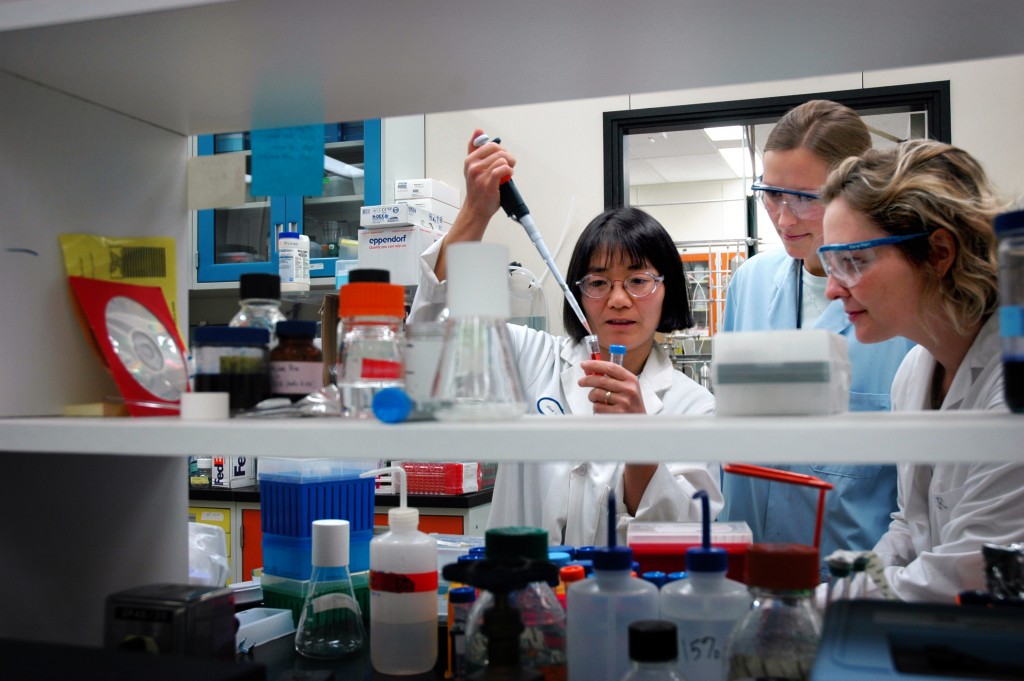
Photo from: Idaho National Laboratory (flickr.com)

As you can see there is a gradient to what we might consider to be a GMO. The point of this is not to confuse you into thinking a GMO is what it isn’t, but to understand it better. If you are dying to find out the answer; most countries and people would say a GMO would be everything after 3 or 4.