A genetically modified crop is not automatically good.
It is also not automatically bad.
The technology used to alter a gene does not tell us whether the final organism will help people, damage an ecosystem, enrich one company, or improve life for an entire community.
To decide whether a GMO is good, we need to look beyond the laboratory process.
We need to look at what the organism does.
What Is Life?
The textbook definition of life normally describes several activities.
Living things use energy.
They produce waste.
They reproduce.
They are enclosed by a membrane.
They adapt to their environment.
These characteristics help us identify life, but they do not explain why life matters.
One way to think about life is that living systems create order.
A seed takes water, minerals, carbon dioxide, and sunlight and organizes them into roots, leaves, flowers, and more seeds.
An animal eats food and uses it to maintain a complex body.
An ecosystem contains many organisms that gather, store, move, and reuse energy and materials.
Life maintains organization in a universe that otherwise moves toward disorder.
If the continued existence of life is good, then creating conditions where life can exist is better than destroying those conditions.
The possibility of life is better than the absence of life.
More life may be better than less life.
But this creates another question.
Is all life equal?
More Life or Better Life?
A bacterium and a caterpillar are both alive.
Both may perform useful roles in an ecosystem. However, a caterpillar is a more complex organism. It contains many specialized cells, consumes more resources, interacts with plants and predators, and may eventually become a butterfly or moth.
Does that make the caterpillar more valuable?
What about two humans?
Does every person have the same ability to affect the world?
A healthy person with access to education, resources, and a supportive community may be able to improve the lives of many other people. A person struggling to meet basic needs may have less opportunity to do so.
This does not mean that one person deserves basic rights while another does not.
It means that quality of life influences what a person is capable of doing.
Maslow’s hierarchy of needs provides a useful way to think about this.
A person focused on finding food and shelter has fewer resources available for invention, education, leadership, art, or helping others.
As basic needs are met, a person gains more ability to affect the world around them.
Quality of life creates the possibility of improving more life.
The Quality of the Collective
The same idea can apply to groups.
A community can accomplish things that one person cannot.
A hospital can treat thousands of people.
A university can educate generations of students.
A government can create systems that affect millions of lives.
An electrical grid provides more useful energy than thousands of disconnected batteries.
For visual purposes, imagine this progression:
No energy.
One thousand empty batteries.
One hundred calculator batteries.
One car battery.
An electrical grid.
The electrical grid does not only contain more energy. It organizes and distributes that energy so it can be used by an entire society.
Life can be considered in a similar way.
The possibility of life matters.
The amount of life matters.
The quality of individual life matters.
The ability of a collective to improve other lives also matters.
This gives us a possible hierarchy:
Absence of life < Possibility of life < More life < Quality of life < Quality of the collective
Can a Technology Be Good or Evil?
A technology is not a living organism, but it can affect life.
A technology may increase food production, cure a disease, protect habitat, or make valuable resources available to more people.
It may also kill organisms, pollute water, concentrate power, or reduce the ability of people to control their own lives.
This means a technology becomes good or bad through its design, adoption, and application.
A knife can prepare food or injure a person.
A pesticide can protect a harvest or damage beneficial insects.
A genetic engineering tool can produce medicine or create a crop that primarily benefits the company selling it.
The physical technology may be the same.
The purpose and outcome are different.
The Importance of Intent
The intended use of a technology influences how people judge it.
Consider sterile-seed technology, sometimes called terminator-seed technology.
The general idea is that a company could produce seeds that grow normally but do not produce viable seeds for the next generation.
There may be technical uses for this.
Sterility could help prevent a genetically modified plant from spreading its genes into wild populations. A plant designed for a specific controlled use could be prevented from reproducing outside that environment.
But many people would see the technology differently if it were used to stop farmers from saving seeds.
In that case, farmers would need to purchase new seeds every year.
The technology itself has not changed.
The perceived purpose has.
Used to prevent an organism from escaping, sterility might be considered an environmental safeguard.
Used to force repeated purchases, the same trait may be viewed as a tool for increasing corporate control.
The application and perceived intent change the moral judgment.
Why People Distrust Transgenic Crops
Transgenic crops are plants containing genes inserted or altered through biotechnology.
They may be grown for food, fuel, fiber, medicine, or industrial materials.
Public concerns about these crops often include:
Environmental effects.
Human health.
Corporate ownership.
Seed prices.
Unintended consequences.
Scientists may focus on whether a gene was inserted correctly or whether a crop performs as intended.
The public may be asking different questions.
Who developed the crop?
Why was it developed?
Who will benefit?
Who will carry the risk?
Can the organism spread?
What happens if something goes wrong?
These are not always objections to the act of changing a gene.
They are objections to the system surrounding the technology.
Glowing Plants and Escaping Genes
Imagine a genetically modified plant that glows.
The plant might be designed for decoration, education, research, or lighting.
Some people may worry that it could reproduce with wild plants and spread its modified genes into the environment.
The concern is not necessarily that glowing is dangerous.
The concern is that the organism may escape human control.
Biotechnology could also provide a solution.
The plant might be engineered to depend on a nutrient that is not normally found in nature. Without that nutrient, it could not survive or reproduce.
In this case, technology creates a concern and then provides a possible safeguard.
The important question becomes whether the safeguard works well enough.
A Moral Rubric for GMOs
GoodMo has previously rated technologies using three categories:
Good for People
Does the technology improve human health and avoid harming people?
Good for Planet
Does it protect biological diversity, habitat, and the ability of ecosystems to support life?
Good for Profit
Does it create useful value by addressing a need?
This is a useful starting point.
However, we can expand the framework by asking more specific questions about life.
1. Does It Protect the Resources Needed for Life?
Every organism needs resources.
Plants need light, water, nutrients, space, and suitable temperatures.
Animals need food, water, oxygen, habitat, and protection from harmful conditions.
A technology may directly affect these resources.
A fertilizer may help plants grow.
Pollution from that fertilizer may reduce oxygen in a river.
A crop may require less water.
A factory producing the crop may consume large amounts of energy.
We should examine both direct and indirect effects.
2. Does It Increase or Decrease the Amount of Life?
A technology may help one organism while killing another.
An insect-resistant crop may allow more crop plants to survive, but it may reduce the number of insects in the field.
This does not automatically make the technology bad.
Agriculture always favors certain organisms over others.
Planting corn means removing competing plants.
Protecting livestock may mean controlling predators.
The question is whether the loss of life is necessary, proportional, and balanced by broader benefits.
3. Does It Improve the Quality of Complex Life?
A technology may improve human health, nutrition, security, or opportunity.
A crop containing a needed nutrient could prevent disease.
A plant that produces medicine could make treatment available to communities that lack hospitals or reliable transportation.
The effect may be direct, such as curing an illness.
It may be indirect, such as reducing pesticide exposure for farmworkers.
Both effects should be considered.
4. Does It Benefit Society or Only One Group?
A technology may work exactly as intended but distribute its benefits unfairly.
A seed may increase yield while requiring farmers to pay more than the added harvest is worth.
A medicine may cure a disease while remaining too expensive for most patients.
A crop may reduce production costs without lowering food prices.
The existence of profit does not make a technology bad.
Profit can reward innovation and fund future research.
The question is whether value is created for society or only transferred to the owner of the technology.
Rating Bt Crops
Bt crops provide a useful example.
Bacillus thuringiensis is a bacterium that produces compounds toxic to certain insects.
Scientists can insert a gene for a Bt toxin into a crop. The crop then produces the toxin and kills insects that feed on it.
This protects the crop.
More plants may survive.
Farmers may harvest more food.
Pesticide use may also decline in some situations.
But the technology has other effects.
The toxin kills living organisms.
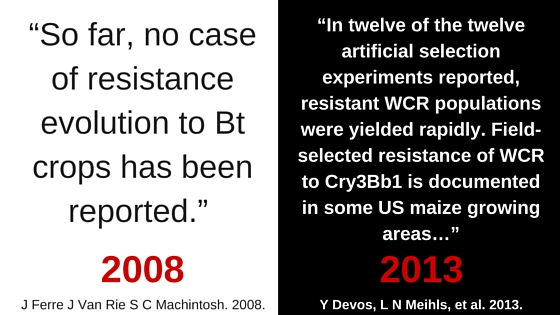
Insects may develop resistance.
The seed may cost more.
The benefits may be distributed differently among biotechnology companies, farmers, and consumers.
How should we rate it?
Resources Needed for Life
Bt crops may reduce the need for externally applied insecticides.
This could reduce chemical runoff and lower exposure for farmworkers.
However, the crop still requires land, water, soil, and nutrients much like a non-Bt crop.
The direct effect on the resources required for life may therefore be limited.
The final rating depends on how the crop is grown and what pesticide practices it replaces.
Amount of Life
Bt toxins kill target insects.
This directly decreases the amount of insect life in the field.
The crop plants benefit because fewer insects eat them.
This creates a tradeoff between the life of the crop and the life of the pest.
There may also be indirect effects.
If fewer insects survive, animals that depend on those insects for food may be affected.
If fewer broad-spectrum insecticides are sprayed, non-target organisms may benefit.
A complete rating must look at both effects.
Human Health
Bt crops may indirectly improve human health if farmers use fewer hazardous insecticides.
Farmworkers may experience less exposure.
Higher yields may contribute to food availability.
However, these benefits must be demonstrated in the actual farming system.
The presence of a useful gene does not guarantee a positive health outcome.
Resistance
A technology may work well during its first few years and become less effective later.
When a toxin kills susceptible insects, resistant insects are more likely to survive and reproduce.
Over several generations, the resistant population increases.
The crop may then lose its ability to control the pest.
This is why long-term effects matter.
A one-year study may show higher yields and fewer insecticides.
A longer study may show growing resistance and declining benefits.
A good technology must not only work today.
It should remain useful long enough to justify its costs and consequences.
Who Receives the Benefit?
Bt seeds may increase yields for some farmers.
They may also increase seed costs.
The biotechnology company benefits from selling the seed.
The farmer benefits only if the added value of the harvest exceeds the added cost.
The consumer benefits only if the technology improves food availability, quality, safety, or price.
A crop should not receive a positive moral rating simply because it is profitable.
We need to ask who receives that profit.
Improving the Technology
A poor rating does not mean genetic engineering should be abandoned.
It means the technology should be improved.
A better insect-resistant crop might:
Reduce harm to non-target insects.
Delay the development of resistance.
Lower pesticide exposure.
Increase farmer income.
Keep food affordable.
Prevent the modified gene from spreading.
Be developed by an institution the public trusts.
Each concern can become a design requirement.
If people fear that the plant will escape, create a reliable biological containment system.
If resistance develops quickly, use multiple defenses or integrate the crop with other pest-management practices.
If the seed primarily benefits the seller, change the pricing, licensing, or ownership model.
The next generation of biotechnology should not only perform a biological task.
It should address the social and environmental problems surrounding that task.
Closing Thoughts
A GMO is not good because it contains an impressive gene.
It is not bad because humans altered it.
The organism should be judged by its application and effects.
Does it protect the resources needed for life?
Does it increase or decrease the amount of life?
Does it improve human or animal well-being?
Does it strengthen communities?
Who receives the benefits?
Who carries the risks?
What happens after one year?
What happens after ten years?
A good transgenic crop should do more than survive, grow, and make a profit.
It should increase the possibility of life, improve the quality of life, and create value for the larger society.
That is a much harder standard than asking whether a gene works.
It is also a better one.